
Currently Empty: ₹0.00

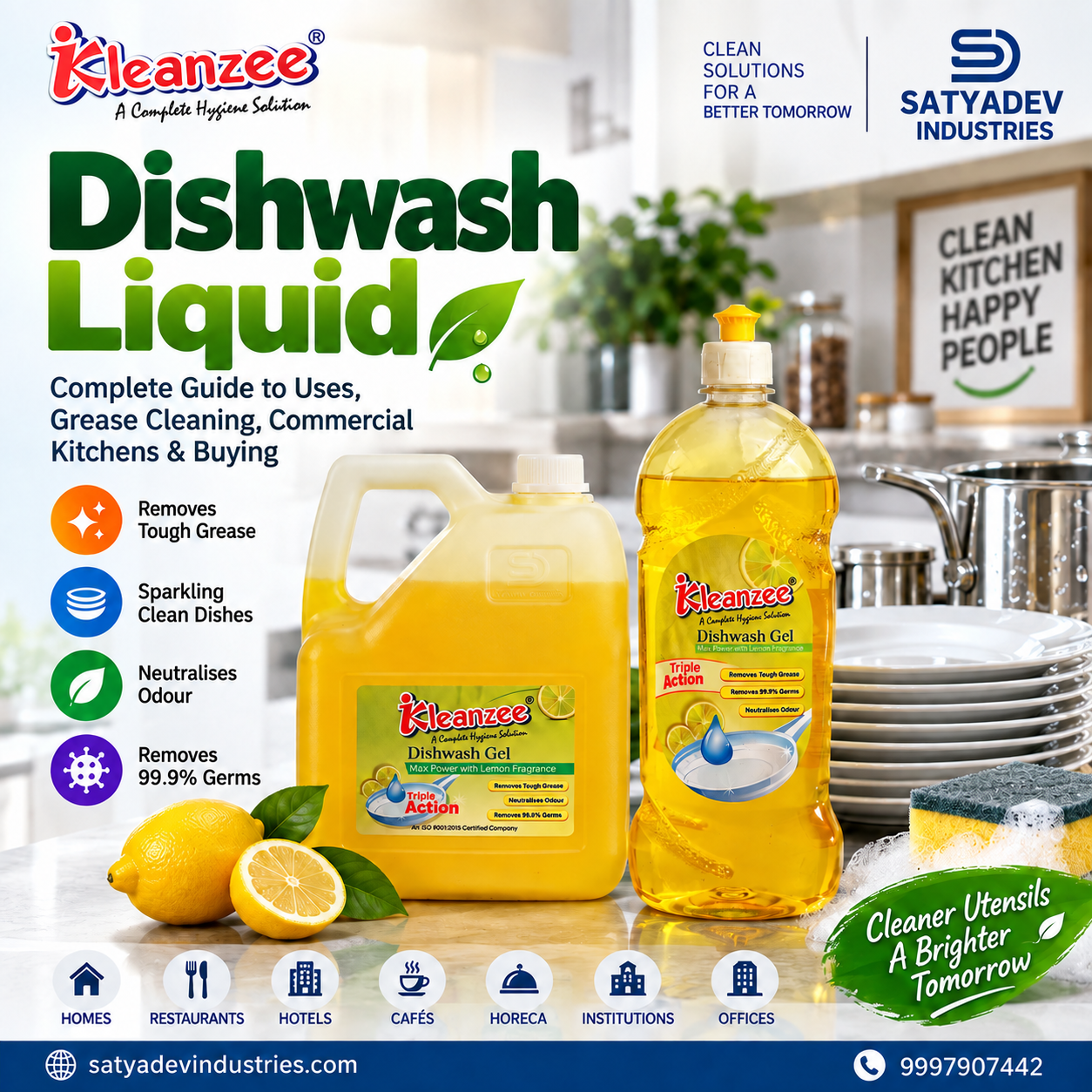
Dishwash liquid is one of the most commonly used cleaning products for removing food residues, oil and grease from plates, utensils, cookware, glasses and other kitchen items. From household kitchens to restaurants, hotels, cafés and institutional kitchens, the right dishwash liquid can make everyday utensil cleaning more convenient and efficient.
However, choosing a dishwashing liquid is not simply about selecting the product with the most foam or the strongest fragrance. Cleaning performance, grease removal, recommended dosage, rinsing, packaging, intended application and supply requirements can all matter.
For businesses, the considerations can be even broader. A restaurant, hotel or HORECA operation may need a commercial dishwash liquid that provides consistent cleaning performance, practical dosing, suitable packaging and reliable bulk supply.
This guide explains what dishwash liquid is, how it works, how to use it effectively, what to look for when buying one, and what commercial buyers should consider when sourcing bulk dishwash liquid from a manufacturer or supplier in India.
What Is Dishwash Liquid?
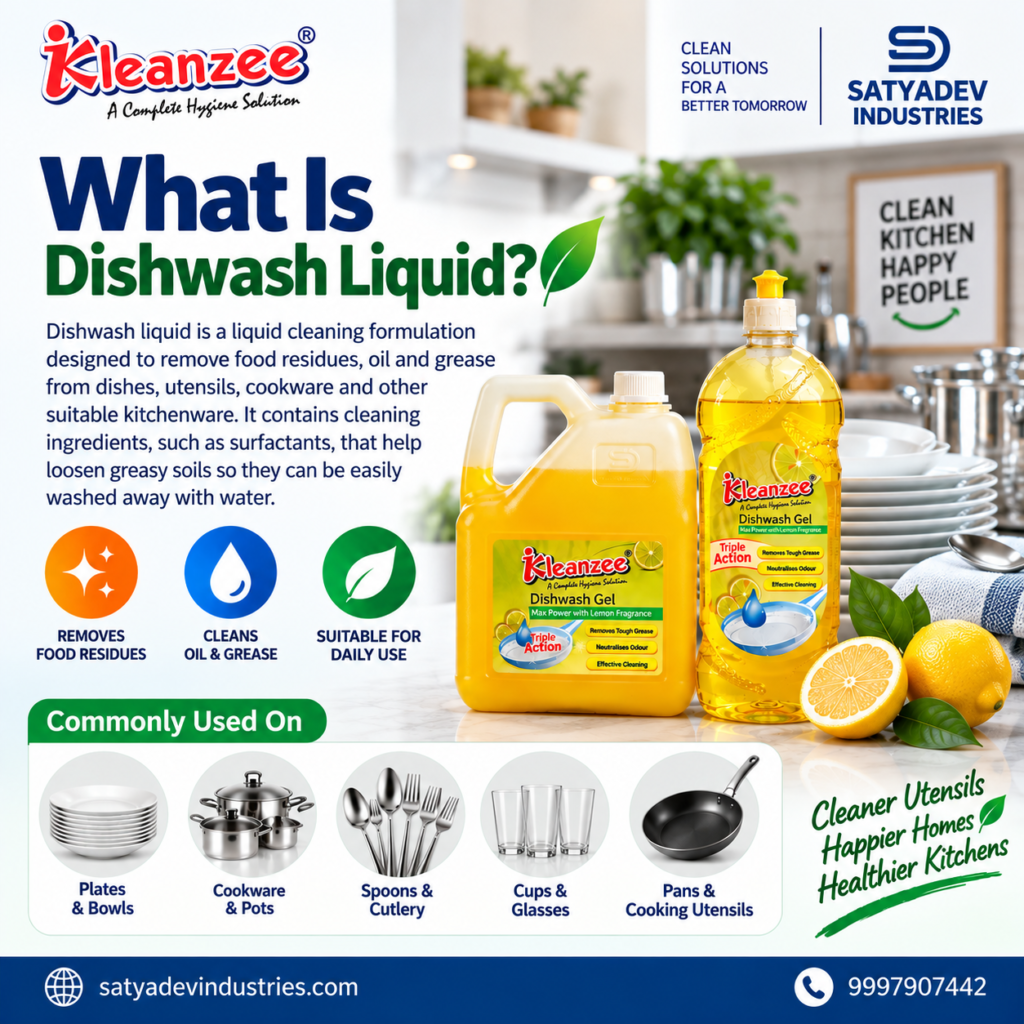
Dishwash liquid is a liquid cleaning formulation designed to remove food residues, oil and grease from dishes, utensils, cookware and other suitable kitchenware.
Dishwashing liquids generally contain cleaning ingredients such as surfactants that help loosen and remove oily residues, grease and food soils from surfaces. Depending on the formulation, other ingredients may be included to influence properties such as viscosity, fragrance, appearance, stability and cleaning performance.
Unlike a solid dishwash bar, a liquid formulation can be dispensed directly or used according to the manufacturer’s recommended dilution instructions.
Dishwash liquid is commonly used for:
- Plates and bowls
- Stainless-steel utensils
- Cups and glasses
- Cutlery
- Pots and pans
- Cooking utensils
- Greasy cookware
- Kitchenware suitable for hand washing
The exact suitability of a product depends on its formulation and the manufacturer’s instructions.
How Does Dishwash Liquid Work?
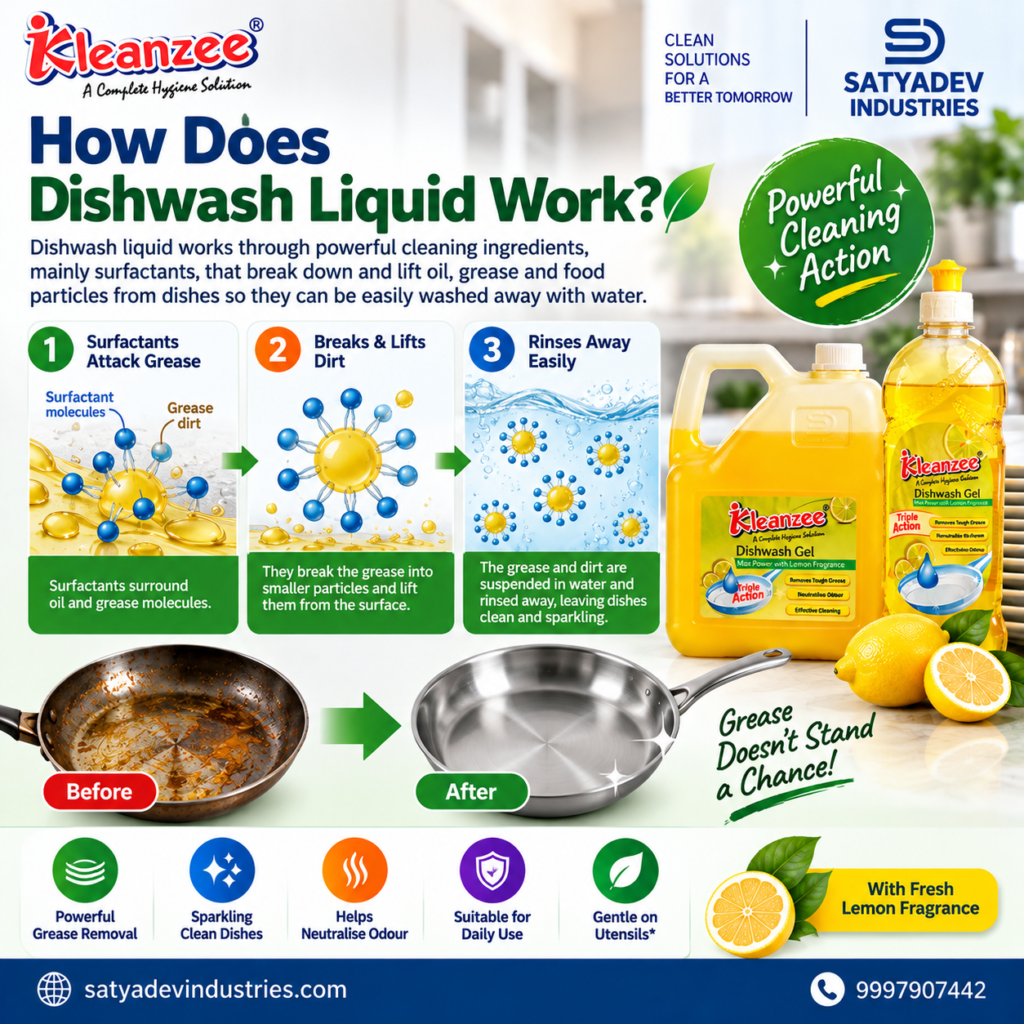
Dishwash liquid works primarily by using cleaning agents such as surfactants to help loosen oils, grease and food residues from surfaces so they can be removed with water and mechanical cleaning.
How Surfactants Help Remove Grease
Grease and oil do not mix readily with water. Surfactants help improve the interaction between water and oily soils, allowing grease and other residues to be loosened from a surface and carried away during washing and rinsing.
This is one reason the formulation of a dishwash liquid matters when cleaning oily utensils.
How Dishwash Liquid Helps Remove Food Residues
Kitchen utensils can contain a mixture of food particles, oils, sauces, starches and other residues. Washing with an appropriate cleaning solution, mechanical action such as rubbing with a sponge, and adequate rinsing work together to remove these soils.
Does More Foam Mean Better Cleaning?
Not necessarily.
Foam can make a cleaning product appear powerful, but foam volume alone does not determine cleaning performance. A dishwash liquid should be evaluated according to its intended cleaning performance, dosage, rinsability and suitability for the application.
For commercial kitchens, this distinction is particularly important because procurement decisions should focus on cleaning performance and overall cost of use rather than appearance alone.
What Can You Clean With Dishwash Liquid?
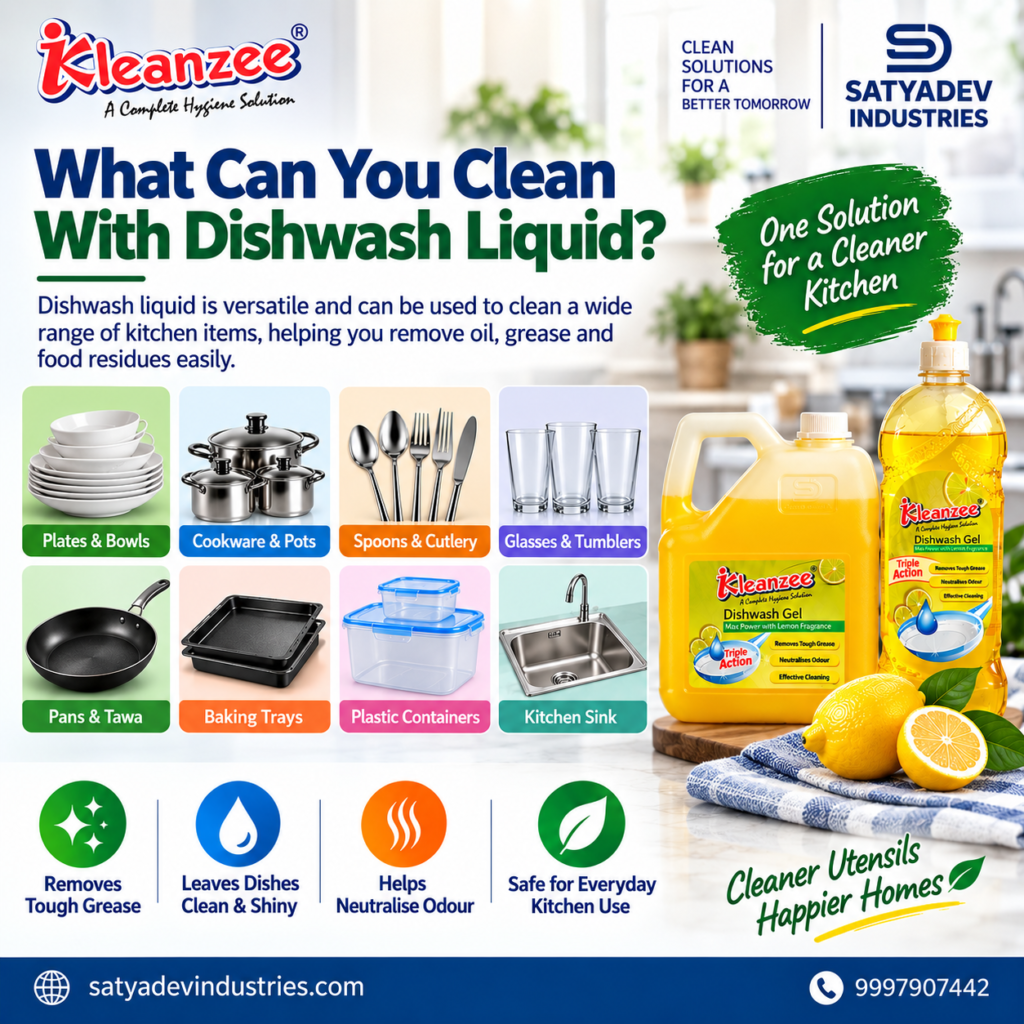
A suitable dishwashing liquid can be used for many common kitchen-cleaning applications.
Plates and Bowls
Dishwash liquid can be used to remove food residues, oils and everyday soils from suitable plates and bowls.
Stainless-Steel Utensils
Stainless-steel plates, spoons, cookware and other suitable utensils are commonly washed using liquid dishwash products.
Glasses and Cups
A suitable dishwash liquid can be used for cleaning cups and glasses, provided the product is appropriate for the material and the manufacturer’s instructions are followed.
Pots and Pans
Cookware can accumulate oil, sauces and food residues. Dishwash liquid combined with suitable mechanical action can help remove these soils.
Oily and Greasy Utensils
Greasy cookware may require more cleaning effort than lightly soiled dishes. Depending on the level of soiling, pre-soaking, appropriate product dosage and mechanical scrubbing may help.
How to Use Dishwash Liquid Correctly
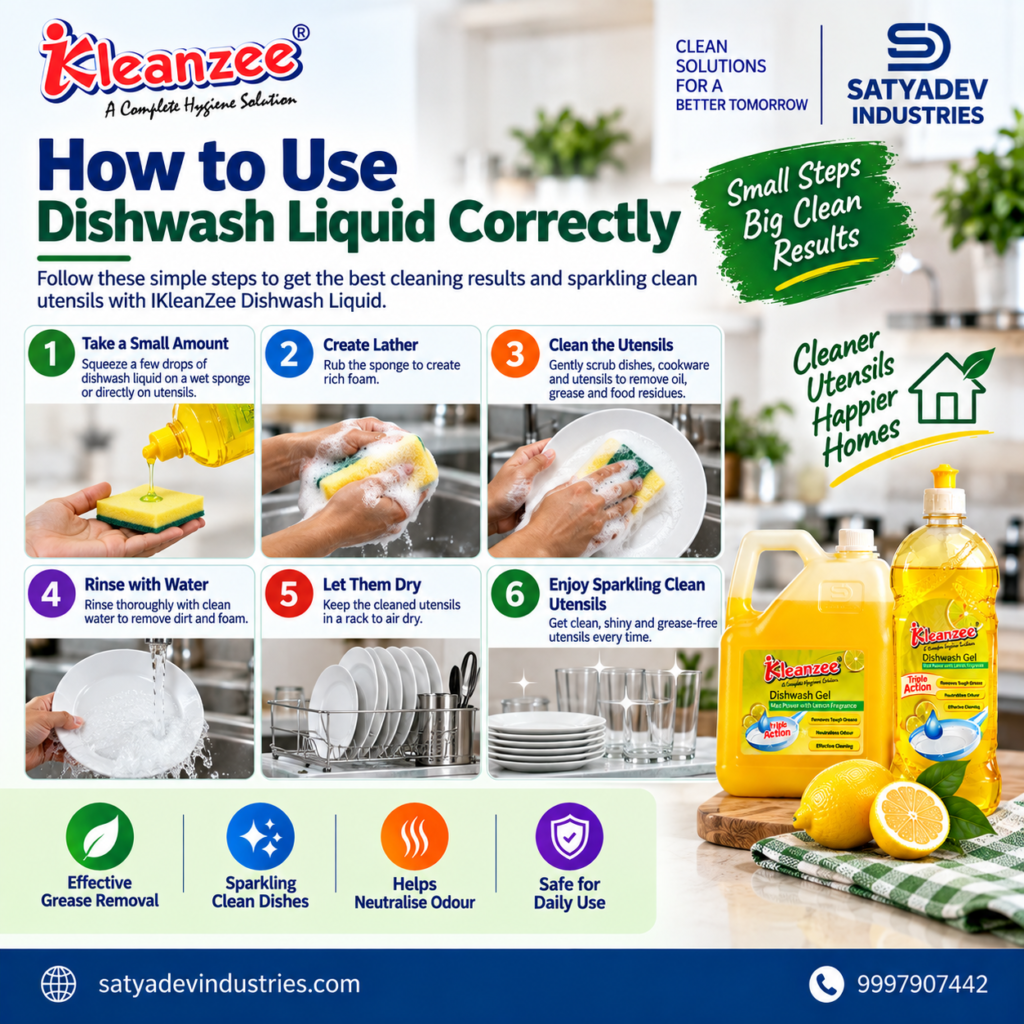
1. Remove loose food particles.
2. Wet the utensil.
3. Apply the recommended amount of dishwash liquid.
4. Scrub with a suitable sponge or cleaning tool.
5. Rinse thoroughly.
6. Allow the utensil to drain/dry appropriately.
Correct usage can have a significant effect on cleaning performance and product consumption.
Always follow the dosage and application instructions provided for the particular product.
Method 1: Using Dishwash Liquid With a Sponge
A common method for hand dishwashing is:
- Remove loose food particles from the utensil.
- Wet the sponge and the utensil.
- Apply the recommended amount of dishwash liquid.
- Work the sponge over the surface.
- Pay additional attention to oily or heavily soiled areas.
- Rinse thoroughly with clean water.
- Allow the utensil to drain or dry appropriately.
Method 2: Using Diluted Dishwashing Liquid
Some commercial and concentrated products may be designed for dilution.
The correct dilution depends on the product formulation and its intended application. Do not assume that every dishwash liquid should be diluted at the same ratio.
For commercial operations, the manufacturer’s recommended dosage should be followed consistently.
How Much Dishwash Liquid Should You Use?
There is no universal dosage that applies to every dishwashing liquid.
The required quantity can depend on:
- Product concentration
- Level of soiling
- Type of utensil
- Water conditions
- Cleaning method
- Manufacturer’s instructions
Using substantially more product does not automatically mean better cleaning. Overdosing can increase product consumption and may make rinsing less convenient.
How to Clean Heavily Greasy Utensils
Heavy grease often requires more than simply adding extra dishwash liquid.
A practical cleaning process can include:
Step 1: Remove excess food and grease.
Step 2: Pre-soak heavily soiled utensils when appropriate.
Step 3: Use the recommended quantity of dishwash liquid.
Step 4: Apply mechanical action with a suitable sponge, scrubber or cleaning tool.
Step 5: Pay particular attention to areas with accumulated grease.
Step 6: Rinse thoroughly with clean water.
For commercial kitchens, the cleaning process should be standardized so that staff use the same dosage and procedure consistently.
What Makes a Good Dishwash Liquid?
When comparing dishwashing products, buyers should consider more than fragrance, colour or foam.
1. Grease and Oil Cleaning
For kitchens handling oily foods, grease-cleaning performance is an important consideration.
2. Food-Residue Cleaning
A suitable formulation should be appropriate for the type of everyday food residues encountered in the intended application.
3. Rinsability
A product should be practical to rinse according to its intended use and instructions.
4. Recommended Dosage
Clear dosage instructions help users control consumption and maintain consistency.
5. Application Suitability
A household dishwash product and a product intended for a high-volume commercial kitchen may have different requirements.
6. Packaging
Packaging should be appropriate for the expected consumption level, storage conditions and dispensing method.
7. Product Information
Commercial buyers should look for clear product information, usage instructions, storage guidance and relevant technical documentation where applicable.
Dishwash Liquid vs Dishwash Gel vs Dishwashing Bar
Dishwashing products are available in different physical forms. The choice depends on the user’s preferences and application requirements.
| Feature | Dishwash Liquid | Dishwashing Gel | Dishwash Bar |
|---|---|---|---|
| Physical form | Liquid | Thick/gel-like liquid | Solid |
| Dispensing | Easy | very Easy | Manual |
| Dosage control | Generally convenient | Convenient | Less precise |
| Packaging options | Bottle, pouch and bulk formats | available in Bottle, pouch and bulk formats | Usually sold as bars |
| Household applications | more Common | Common | Common |
| Commercial applications | Depends on formulation | according to formulation | Depends on application |
It is important not to assume that one physical format is automatically better than another. Cleaning performance depends on the formulation, dosage, application method and level of soiling.
Best Dishwash Liquid for Grease: What Should You Look For?
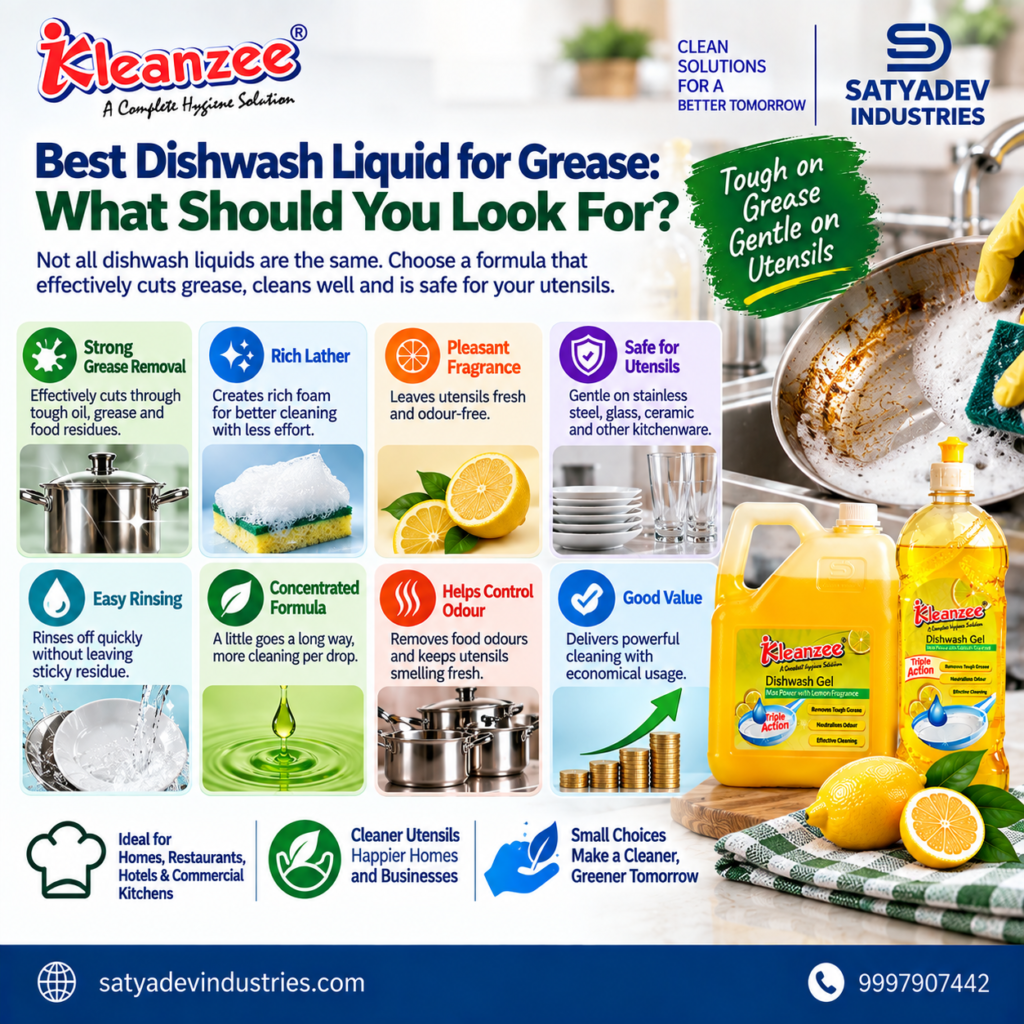
When someone searches for the best dishwash liquid for grease, the most useful approach is to understand what makes a product appropriate for greasy cleaning applications.
Consider the following:
- Intended grease-cleaning performance
- Recommended dosage
- Product concentration
- Type and level of kitchen soiling
- Ease of application
- Rinsing requirements
- Suitability for the intended utensils
- Packaging and dispensing
- Cost per use
For occasional household grease, a suitable everyday dishwashing liquid may be sufficient. High-volume kitchens, however, may need a product and cleaning procedure designed around repeated commercial use.
The important point is that the “best” product depends on the application rather than simply the product’s price, fragrance or foam level.
Dishwash Liquid for Commercial Kitchens
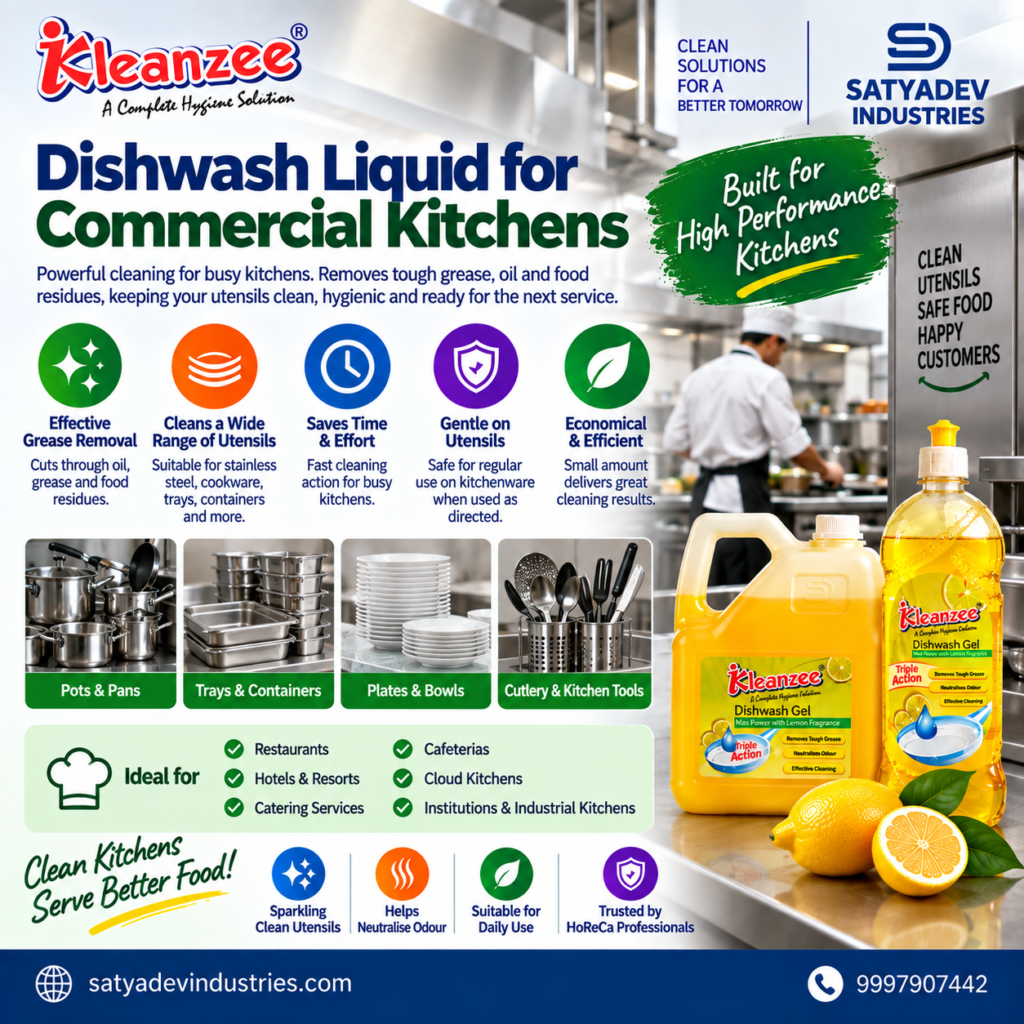
Commercial kitchens have different cleaning requirements from typical household kitchens.
Restaurants, hotels, cafés, caterers, canteens and other food-service operations may wash large quantities of utensils every day. They therefore need to consider both cleaning performance and operational efficiency.
A dishwash liquid for commercial kitchens should be evaluated based on factors such as:
- Grease and food-residue cleaning
- Recommended dosage
- Frequency of use
- Ease of dispensing
- Packaging size
- Storage requirements
- Rinsing procedure
- Staff training
- Product consistency
- Supply reliability
Dishwash liquid can be used for suitable utensils and cookware, while heavily baked-on grease on ovens, grills and similar equipment may require a dedicated oven and grill cleaner for commercial kitchens.
Dishwash Liquid for Restaurants
Restaurants may have continuous utensil-washing requirements throughout service hours. Standardized dosage and cleaning procedures can help reduce unnecessary product consumption. Businesses looking specifically for dishwash liquid for restaurants should also consider packaging, dosage and recurring supply requirements.
Dishwash Liquid for Hotels
Hotels may require dishwashing products across restaurants, banquet kitchens, staff kitchens and other food-service areas. Procurement teams may therefore prioritize consistent supply and commercial packaging.
Dishwash Liquid for HORECA Businesses
HORECA—hotels, restaurants and cafés—can have significantly different volumes and cleaning routines. A supplier should understand the buyer’s application rather than simply recommending a pack size.
Dishwash Liquid for Institutions and Offices
Institutional kitchens, cafeterias, offices, schools and other facilities may also require regular dishwashing products. Their purchasing decisions can involve recurring supply, packaging, documentation and budget considerations.
Dishwash liquid is only one part of a professional kitchen-cleaning program. Businesses may also require specialized commercial cleaning chemicals for floors, bathrooms, glass, surfaces and other areas.
Commercial Dishwash Liquid: What Do Businesses Need?
A commercial dishwash liquid should be evaluated as part of the entire cleaning operation.
Cleaning Performance
The first consideration is whether the product is suitable for the soils encountered in the kitchen.
Cost Per Use
Price per litre is not always the same as cost per cleaning operation.
For example, a product requiring a smaller recommended dosage may have a different cost-per-use profile from a lower-priced product requiring more product per application.
Commercial buyers should therefore compare:
Product price + recommended dosage + cleaning frequency + pack size
rather than looking only at the price of one bottle.
Consistent Dosage
Commercial kitchens often have several employees using the same product. Clear instructions and suitable dispensing can help standardize consumption.
Packaging
A high-volume kitchen may require larger commercial packs than a household user.
Supply Reliability
Running out of an essential cleaning product can disrupt kitchen operations. Recurring buyers should therefore consider supplier reliability and lead times.
Documentation
Businesses may also require product information, safety information and other relevant documentation as part of their procurement process.
Hotels and hospitality businesses often use a broader range of housekeeping chemicals across guest rooms, bathrooms, floors and common areas.
Bulk Dishwash Liquid for Hotels, Restaurants and HORECA
Businesses with regular dishwashing requirements may consider bulk dishwash liquid rather than repeatedly purchasing small consumer packs.
Bulk procurement can be relevant for:
- Hotels
- Restaurants
- Cafés
- Catering companies
- Cloud kitchens
- Institutional kitchens
- Canteens
- Offices
- Facility-management companies
- Distributors and wholesalers
Before purchasing in bulk, buyers should confirm:
- Recommended dosage
- Product application
- Pack size
- Storage requirements
- Minimum order quantity, if applicable
- Delivery requirements
- Product documentation
- Supplier support
- Repeat-order availability
The right bulk pack depends on consumption, storage space and purchasing frequency. Businesses purchasing multiple cleaning products may also benefit from sourcing bulk cleaning chemicals from a manufacturer that can support recurring requirements
How to Choose a Dishwash Liquid Supplier
Choosing a dishwash liquid supplier is an important decision for businesses with recurring requirements.
Here are some factors to evaluate.
1. Manufacturing Capability
Understand whether the supplier is a manufacturer, distributor, trader or a combination of these.
2. Product Consistency
For recurring commercial orders, consistency between batches is important.
3. Pack Sizes
Check whether the supplier can provide pack sizes appropriate for your consumption.
4. Bulk Supply
Confirm whether the supplier can support the required quantity and frequency.
5. Product Documentation
Commercial buyers may require product specifications, safety information, technical information or other documentation depending on their procurement process.
6. Application Support
A useful supplier should be able to provide clear usage and dosage guidance for the intended application.
7. Delivery and Lead Times
For regular buyers, dependable supply can be as important as the product itself.
8. Commercial Support
Hotels, restaurants and institutional buyers may require quotations, repeat-order support and communication with a dedicated supplier.
Businesses purchasing multiple categories of professional cleaning products should consider whether the supplier can support consistent supply across their cleaning requirements.
Dishwash Liquid Manufacturer in India: What Should Buyers Check?
Businesses searching for a dishwash liquid manufacturer in India should look beyond the manufacturer’s product name.
Before placing a commercial order, consider asking:
- Where is the product manufactured?
- What application is the formulation designed for?
- What pack sizes are available?
- How much is the recommended dosage?
- Can the manufacturer supply bulk quantities?
- Is product documentation available?
- How is batch consistency maintained?
- What are the storage requirements?
- What is the expected lead time?
- Can the manufacturer support recurring requirements?
For large-volume procurement, buyers should evaluate the manufacturer based on the complete supply relationship rather than only the initial purchase price. Businesses searching for a cleaning chemicals manufacturer in India should evaluate not only the product but also manufacturing capability, quality controls, documentation and long-term supply support.
Why Businesses Buy Dishwash Liquid Directly From Manufacturers
Buying directly from a manufacturer can be relevant for businesses with recurring or larger-volume requirements.
Potential considerations include:
- Direct communication with the manufacturer
- Bulk procurement
- Commercial packaging
- Recurring supply
- Product information
- Application support
- Distributor or wholesale requirements
However, businesses should compare suppliers based on their actual requirements, product suitability, commercial terms and supply capabilities.
IKleanzee Dishwash Liquid Gel by Satyadev Industries
Satyadev Industries manufactures and supplies cleaning products for commercial, institutional and household applications under brands including IKleanZee.
The IKleanZee Dishwash Liquid Gel is designed for dishwashing and utensil-cleaning applications. It can be considered by households as well as businesses looking for a liquid dishwash product for regular kitchen cleaning.
For commercial buyers, the product can be relevant to applications such as:
- Hotels
- Restaurants
- Cafés
- HORECA businesses
- Offices
- Institutional kitchens
- Catering operations
- Facility-management requirements
- Bulk procurement
For product-specific information, including current pack sizes, dosage and usage instructions, buyers should refer to the official product documentation and product page.
Looking for dishwash liquid for commercial kitchens or bulk procurement? Contact Satyadev Industries to discuss your requirement.
How to Calculate the Cost of Dishwash Liquid
Commercial buyers should consider cost per use, not just purchase price.
A simple calculation is:
Cost per use = Product cost × quantity used per cleaning operation
For example, if a product costs ₹X per litre and the recommended quantity is Y ml per application, the approximate product cost per application can be calculated from the actual dosage.
This allows hotels, restaurants and institutions to compare different products more meaningfully.
The calculation should always use the manufacturer’s recommended dosage and the actual purchase price available to the buyer.
Common Mistakes When Using Dishwash Liquid
Using Too Much Product
More product does not automatically mean better cleaning.
Using Too Little Product
Insufficient product may not provide the intended cleaning performance for the level of soiling.
Ignoring Product Instructions
Different formulations have different dosage and application requirements.
Not Removing Heavy Food Waste First
Removing loose food particles before washing can make the cleaning process more efficient.
Poor Rinsing
Utensils should be rinsed appropriately after washing according to the product’s intended use.
Using the Wrong Product for the Application
A product designed for one cleaning application should not automatically be assumed to be suitable for another.
Dishwash Liquid Buying Checklist
Before purchasing dishwash liquid, ask:
- Is it suitable for my intended application?
- Does it address the type of grease and food residues I encounter?
- How much is the recommended dosage?
- What is the cost per use?
- What pack sizes are available?
- Is the packaging suitable for my operation?
- Are storage instructions available?
- Can the supplier provide the required quantity?
- Is product documentation available where required?
- Can the supplier support recurring orders?
For commercial kitchens, this checklist can help procurement teams compare products more systematically.
For businesses evaluating a dishwash liquid for regular utensil cleaning, you can learn more about IKleanZee Dishwash Gel , including its recommended usage and available pack sizes.
Frequently Asked Questions About Dishwash Liquid
What is dishwash liquid?
Dishwash liquid is a liquid cleaning formulation intended for washing dishes, utensils, cookware and other suitable kitchenware. It helps loosen and remove food residues, oil and grease during the washing process.
What is the difference between dishwash liquid and dishwashing liquid?
In most everyday usage, “dishwash liquid” and “dishwashing liquid” refer to the same general category of liquid products used for washing dishes and utensils. Product formulations can differ between manufacturers.
Is dishwash liquid effective for grease?
A suitable dishwash liquid can help remove grease and oily residues. Cleaning performance depends on the formulation, dosage, level of soiling and cleaning method.
What is the best dishwash liquid for grease?
There is no single product that is objectively best for every grease-cleaning situation. Buyers should consider cleaning performance, recommended dosage, intended application, rinsability and cost per use.
How much dishwash liquid should I use?
Use the quantity recommended by the manufacturer. Dosage varies according to the product formulation, concentration, application and level of soiling.
Is dishwash liquid suitable for commercial kitchens?
Yes, products specifically intended or suitable for commercial applications can be used in commercial kitchens. Hotels, restaurants and HORECA businesses should select products according to their cleaning requirements and the manufacturer’s instructions.
What is commercial dishwash liquid?
Commercial dishwash liquid refers to a dishwashing product used in business, institutional or food-service environments. Commercial buyers often consider factors such as dosage, cleaning performance, packaging, supply and cost per use.
Where can businesses buy bulk dishwash liquid?
Businesses can purchase bulk dishwash liquid directly from manufacturers, authorized suppliers, distributors or wholesalers. Buyers should compare product suitability, dosage, pack sizes, pricing and supply capabilities.
How do I choose a dishwash liquid supplier?
Evaluate the supplier’s manufacturing or sourcing capability, product consistency, available pack sizes, bulk supply capability, documentation, delivery support and ability to meet recurring requirements.
What should I check before buying from a dishwash liquid manufacturer in India?
Check the manufacturer’s product application, dosage, packaging, manufacturing capability, quality controls, documentation, bulk supply capacity and commercial terms before placing an order.
Final Thoughts
Dishwash liquid is a practical cleaning solution for everyday utensil washing, but selecting the right product requires more than comparing bottle prices or foam levels.
For households, important considerations can include cleaning performance, ease of use, dosage and rinsing. For hotels, restaurants, HORECA businesses and institutions, the decision can also involve commercial dishwash liquid performance, cost per use, bulk packaging, supply reliability and manufacturer support.
Whether you are buying a small quantity for everyday kitchen use or sourcing bulk dishwash liquid for a commercial kitchen, evaluate the product according to the application and follow the manufacturer’s recommended usage instructions.
For businesses looking for a dishwash liquid manufacturer or supplier in India, Satyadev Industries can be contacted regarding IKleanZee cleaning products and commercial/bulk requirements.
If you are a hotel, restaurant, HORECA business, institution, distributor or bulk buyer looking for dishwash products, contact Satyadev Industries to discuss your requirement.
